Shopify New Year Sale: How to Start January With Strong Revenue
January doesn't have to be a graveyard. A Shopify New Year sale strategy that runs clearance and new arrivals in parallel converts both bargain hunters and resolution shoppers.
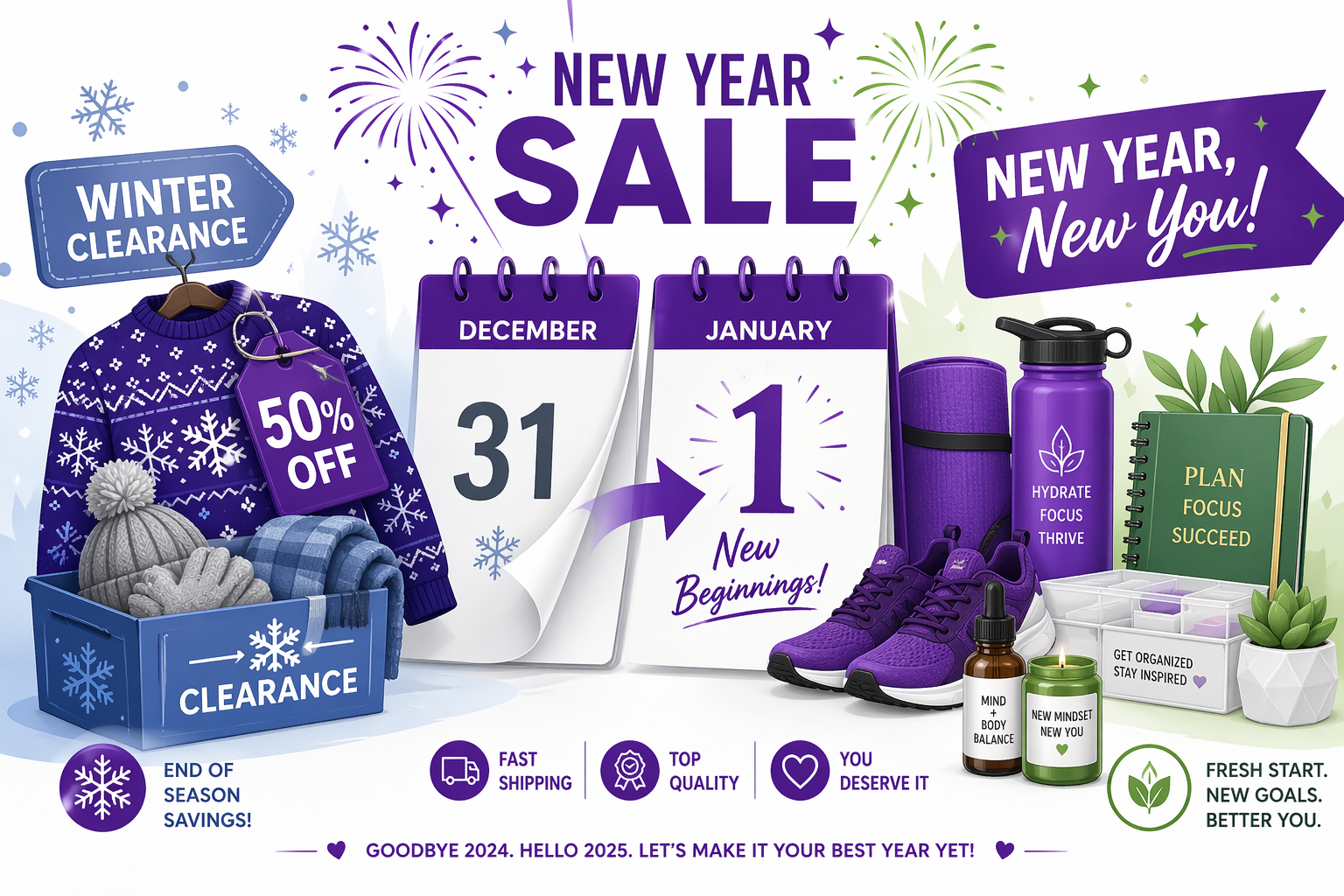
January is brutal for ecommerce. Post-holiday spending fatigue. Cold weather. The “New Year budget reset” where people feel guilty about what they spent in December. Most stores see a 30 to 40 percent dip in January revenue compared to December, and U.S. retail data confirms January is consistently the slowest month of the year for online and physical retail alike. But January does not have to be brutal. A focused Shopify New Year sale strategy turns the same calendar month into momentum by leveraging two psychological forces: clearance mentality and resolution mindset.
Why January Is Actually an Opportunity (Not a Graveyard)
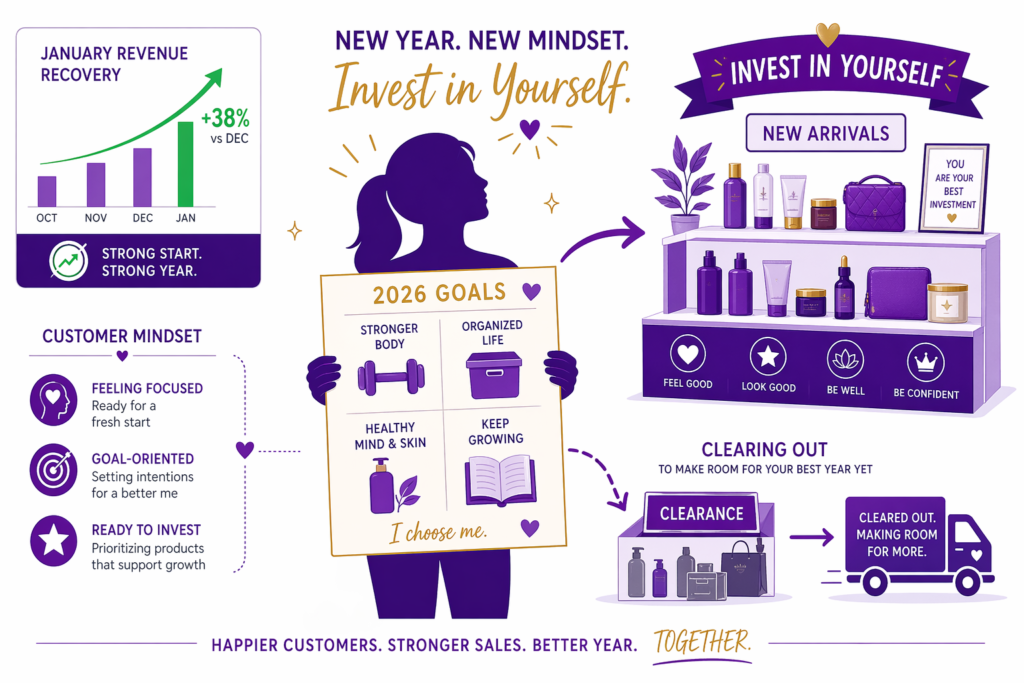
A solid Shopify New Year sale strategy starts by recognizing that January shoppers are not a single audience. There are two distinct groups walking into your store, each with completely different buying triggers, and each one is ready to convert if you serve them correctly.
Clearance Mentality
You have leftover holiday inventory. Customers know it is leftover. They expect aggressive pricing.
Sellers expect to discount heavily. Buyers expect to get clearance deals. Expectations align. Both are ready to transact.
Resolution Mindset
January 1 represents a fresh start. New year. New goals. New purchases.</p>
Fitne
ss people buy equipment. Organization people buy storage. Self-care people buy skincare and wellness products. Statista data on top New Year’s resolutions shows close to half of U.S. adults commit to a fitness goal each January, with saving money, eating healthier, and self-improvement rounding out the top five.
There is a massive psychological shift from “I am done shopping for others” (December) to “I am investing in myself” (January).
The Clearance Angle: Moving Inventory
Here is the brutal reality: anything that did not sell by January 1 probably will not sell at full price.
A Christmas sweater on January 2 is not Christmas anymore. It is “holiday clearance.” The psychological context has shifted.
Your strategy should acknowledge this. Price the unsold inventory aggressively. The goal is conversion of inventory to cash, not margin preservation.
Recommended approach:
- Winter apparel: 50% off
- Holiday decorations: 60% off (useless after holiday)
- Seasonal items: 40 to 50% off
- General merchandise that is slow-moving: 30 to 40% off
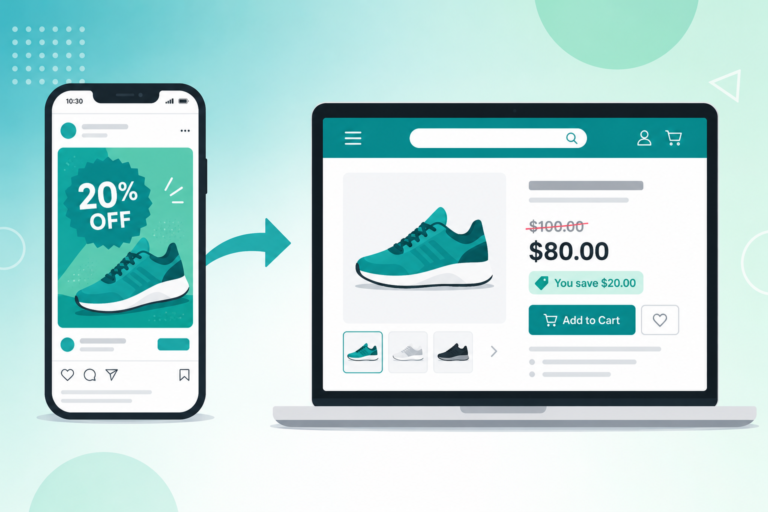
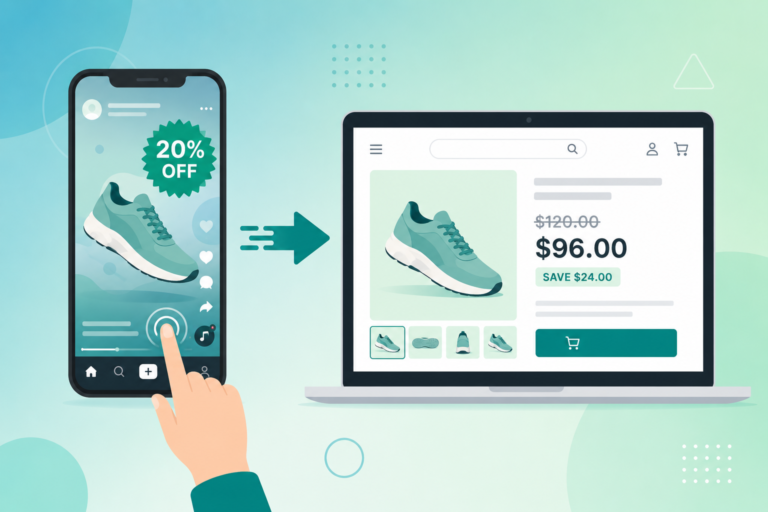
Use Adsgun to display these discounts prominently on product pages and in a dedicated “Clearance” collection. Strike-through pricing on product pages signals that these are real deals, not manufactured urgency.
The messaging: “Final Winter Clearance. Make Room for Spring.” Creates a sense of “this will not last” without being dishonest.
The New Arrivals Angle: Full Price, Resolution Positioning
While you are clearing winter inventory, your new spring inventory arrives. Price it at full price (or slight discount) and market it with resolution messaging.
Recommended approach:
- New spring apparel: full price (or 15% intro discount)
- Fitness and wellness products: full price
- Organization and storage: full price
- Self-care items: full price
Use Adsgun to feature these prominently. No strike-through pricing because these are not discounted, they are new. Use badges like “New Arrival” or “Best for Your 2026 Goals.”
The messaging: “New Year, New You. Invest in yourself this January.” Positions these as aspirational purchases, not bargain hunting. McKinsey’s Future of Wellness research values U.S. wellness spending at over 500 billion dollars annually, growing 5 percent per year, and notes that consumers will cut almost any other category before they cut wellness.
The Psychology of the Contrast
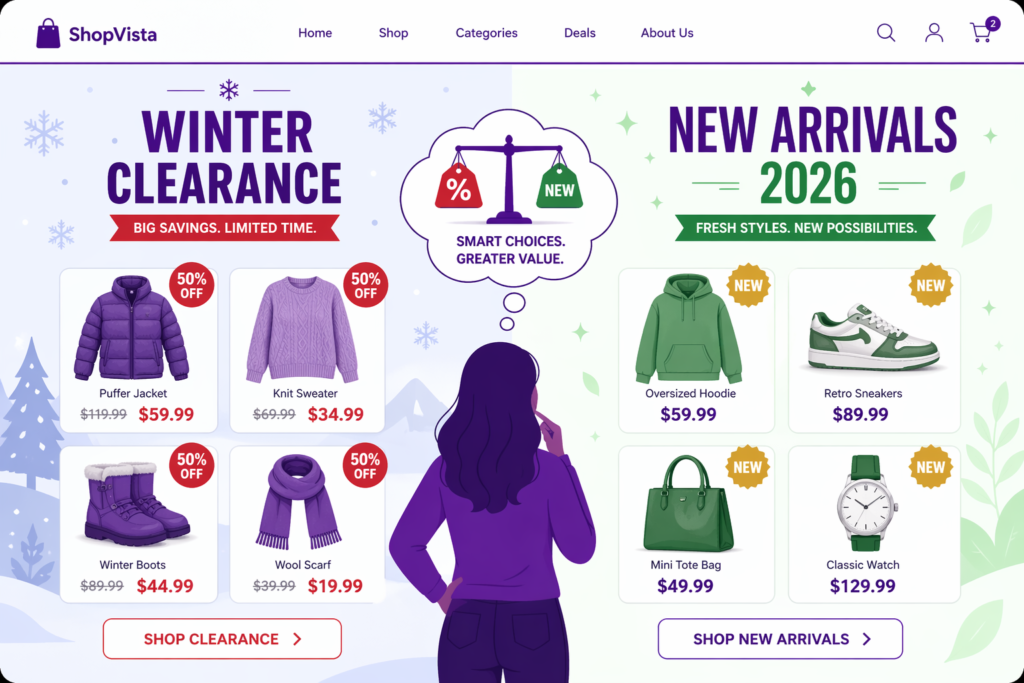
Here is the power move: run clearance and new arrivals simultaneously.
The same customer journey becomes:
- Arrive at store (New Year resolution mindset)
- See the clearance section (clear out holiday stuff I do not need)
- See the new arrivals section (invest in my goals)
- Realize: I can clear my winter inventory budget to fund my new year purchases
A customer might spend 150 dollars on new fitness equipment (full price) because they are offsetting it with 150 dollars of clearance purchases (which they feel good about because they are “making room”).
The store’s perspective: 150 dollars in revenue on fitness equipment, 150 dollars in clearance revenue that moves inventory. Both are wins.
This contrast is powerful. Without the new arrivals, clearance feels like a fire sale (depressing). Without the clearance, new arrivals feel expensive (hard to justify). Together, they feel balanced.
Setting Up Your Shopify New Year Sale Strategy in Adsgun
Your launch window is the week of December 26. The dual promotion needs about 30 minutes of setup, then it runs on autopilot through the entire month.
Step 1: Create the Clearance Promotion
Set the discount to 50% off as a baseline. Apply it to the “Clearance” tag or the “Holiday” collection. Schedule it to auto-start January 1 and auto-end January 31. Display strike-through pricing on every clearance item across product pages, collections, and cart.
Step 2: Schedule the New Arrivals Promotion
Set the discount to none, or 15% intro if you want to be aggressive. Apply it to products tagged “New Arrivals” or in the dedicated collection. Auto-apply the code so customers do not have to type anything at checkout. Schedule it to auto-start January 1 and auto-end January 15. Display the regular price with a “New Arrival” badge but no strike-through.
Step 3: Email Segmentation for Your New Year Sale
Different customers respond to different stories. Build three tag-based customer segments and target each one with a separate angle.
- Segment 1, “Clearance shoppers” (previous clearance buyers): email about winter clearance
- Segment 2, “Full price buyers” (previous full-price buyers): email about New Year goals and new arrivals
- Segment 3, “Deal seekers”: email about clearance
Step 4: Homepage Messaging
Use the announcement bar at the top of your store to broadcast the dual promotion: “New Year Sale: Clear Winter, Welcome Spring.” Feature the clearance section on the left of your homepage and new arrivals on the right. Create a visual contrast (red or amber for clearance, green or fresh tones for new arrivals).
Making Email Drive January Revenue
Email is critical in January because organic traffic is low. Most customers are not actively shopping. A coordinated Shopify email discount strategy is the difference between a slow January and a strong one.
Email 1 (January 1): “Make Room for Your 2026 Goals”
The headline focuses on resolutions, not discounts. Feature new year and self-improvement products at full price. Subtly mention clearance as a way to “fund” your goals.
Email 2 (January 3): “Winter Clearance: 50% Off Everything”
The headline focuses on clearance deals. Feature the inventory you need to move. Call to action: “Clear your closet.”
Email 3 (January 7): “Your Fitness, Organization, and Self-Care Essentials”
This is a follow-up to those who engaged with the resolution email. Feature best-selling new arrivals. Use social proof such as “500 plus customers bought this for their 2026 goals.”
Email 4 (January 14): “Clearance Ending Soon: Final Winter Sale”
Build urgency around clearance ending. Last chance messaging. Free shipping on orders over 50 dollars sweetens the deal without discounting further.
Email 5 (January 21): “Final Days: 50% Off Winter Clearance”
Very last call on clearance. After this, remaining inventory gets donated or discarded.
Post-January: Transition to Spring
By January 31, most holiday inventory should be gone.
On February 1, transition messaging from “clearance” to “spring sale.” The same discounts can remain (if needed), but the psychological framing shifts.
“Winter Clearance” feels like desperation. “Spring Sale” feels like seasonal shopping. The transition happens naturally as the calendar changes, and the dual-promotion playbook from your Shopify spring promotion strategy reuses everything you built in January.
Bottom Line: Make Your Shopify New Year Sale Strategy Work
January is slow because merchants treat it as slow. They discount deeply out of panic, which signals distress.
Instead, acknowledge the reality. You have clearance inventory (sell it confidently) and you have resolution shoppers (serve them with new products). A Shopify New Year sale strategy that runs both promotions in parallel, with separate messaging and separate display logic, converts both audiences without cannibalizing either.
For more conversion mechanics that compound on top of seasonal pricing, see our breakdown of seven tactics that push Shopify sales year-round.
Two strategies. One month. Different results.
Turn January From Brutal to Profitable
Use Adsgun to run clearance and new arrivals simultaneously. Display differently. Message differently. Convert both customer types.
Start Your Free 7-Day Trial and plan your Shopify New Year sale strategy today.