The Psychology of Discounts: Why Deals Make People Buy
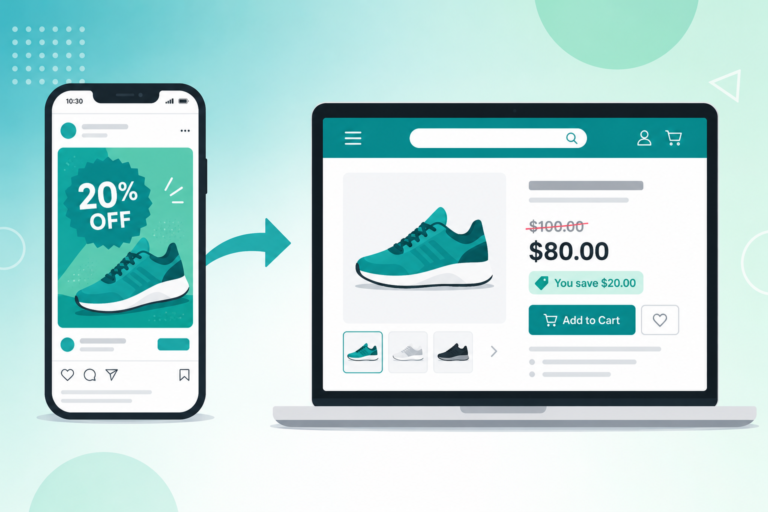
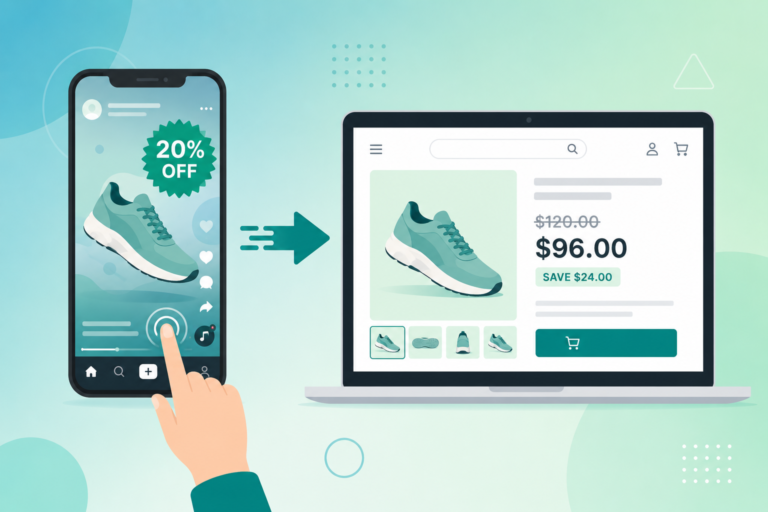
Why does "Was $99, Now $79" convert when a flat "$79" doesn't? The same five behavioral triggers (loss aversion, anchoring, the zero effect, scarcity, and social proof) decide every discount click. Here is how they work and how to apply them ethically on Shopify.
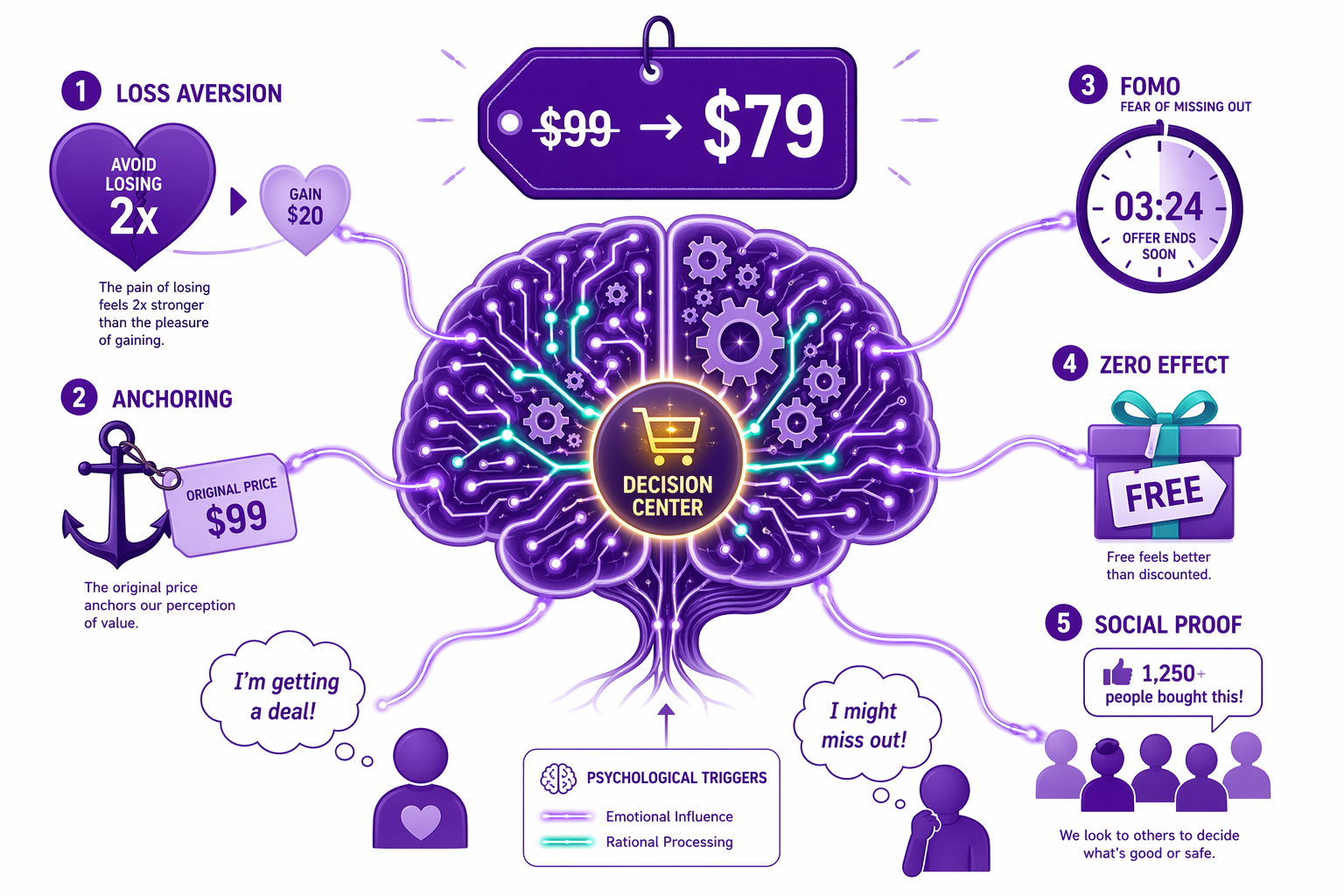
The psychology of discounts in ecommerce explains why a “Was $99, Now $79” tag makes shoppers click “Add to Cart” while a flat “$79” leaves them hesitating. The price is identical. The mental math is not. This guide unpacks the five behavioral mechanics that turn a discount into a decision: loss aversion, anchoring, the zero price effect, scarcity, and social proof. Each one is grounded in decades of behavioral economics research, and each one shows up every time a Shopify shopper sees a strike-through price.
Loss Aversion: Why Losses Hurt Twice as Much as Gains Feel Good
Loss aversion is Kahneman and Tversky’s most famous behavioral economics finding, and it sits at the foundation of the psychology of discounts in ecommerce. When faced with equivalent gains and losses, losses loom psychologically larger.
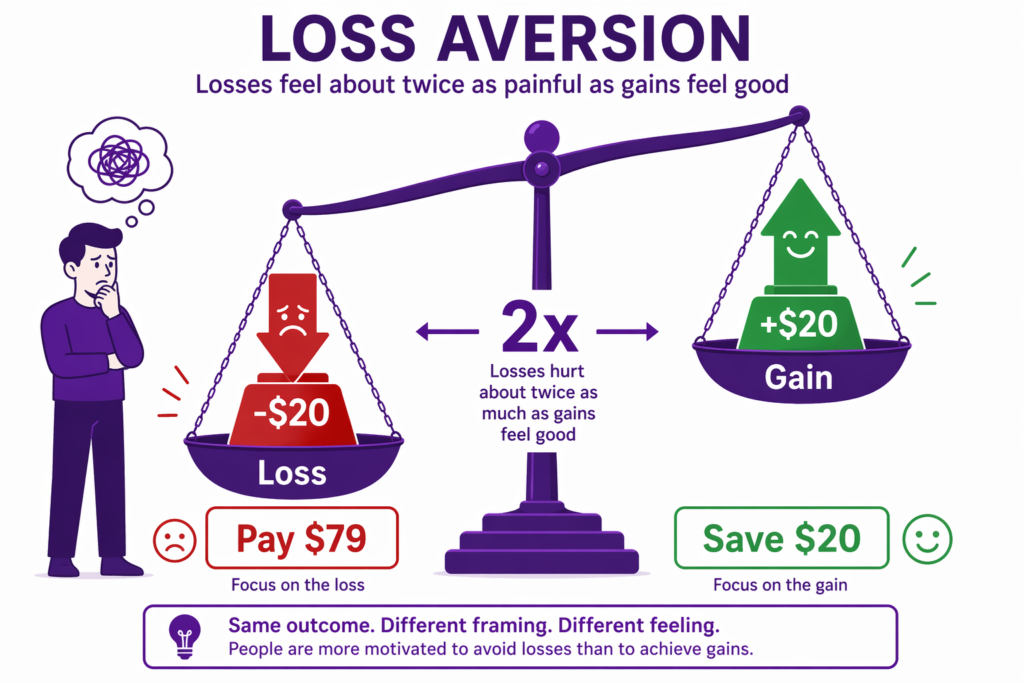
Here is the famous experiment: people are offered a 50/50 bet where they win $100 or lose $100. Most decline. But if you frame it as “you are guaranteed $100, but might lose it,” the same math feels worse. The pain of losing $100 exceeds the pleasure of gaining $100.
In ecommerce, this translates directly: “Save $20” (framed as avoiding a loss) feels more compelling than “Get a price reduction to $80” (a neutral frame).
When you show “Was $99, Now $79,” your customer’s brain processes it as: “I am avoiding the loss of $20. I am getting a deal I might miss.” This triggers a psychological response that simple pricing (just “pay $79”) does not trigger. The same logic is why strike-through pricing psychology works so reliably across product categories.
The mechanism: loss aversion activates the same neural pathways as threat detection and survival. Your brain is wired to avoid losses because, historically, losing something meant dying. This is hardwired.
This is why discount visibility matters. Hidden discounts (revealed only at checkout) do not trigger loss aversion as powerfully, because the customer has not anchored on the original price as “what they are giving up.” If your store hides discounts until the final step, you are leaving the strongest psychological lever sitting unused. We unpack the full impact in our breakdown of Shopify visible discount pricing.
Anchoring: The First Price Sets the Reference Point
The first number you see becomes the anchor for all subsequent evaluations. This is anchoring bias, and it is one of the most replicable findings in behavioral economics. Dan Ariely’s classic anchoring experiments demonstrate just how arbitrary, and how sticky, that first reference point can be.
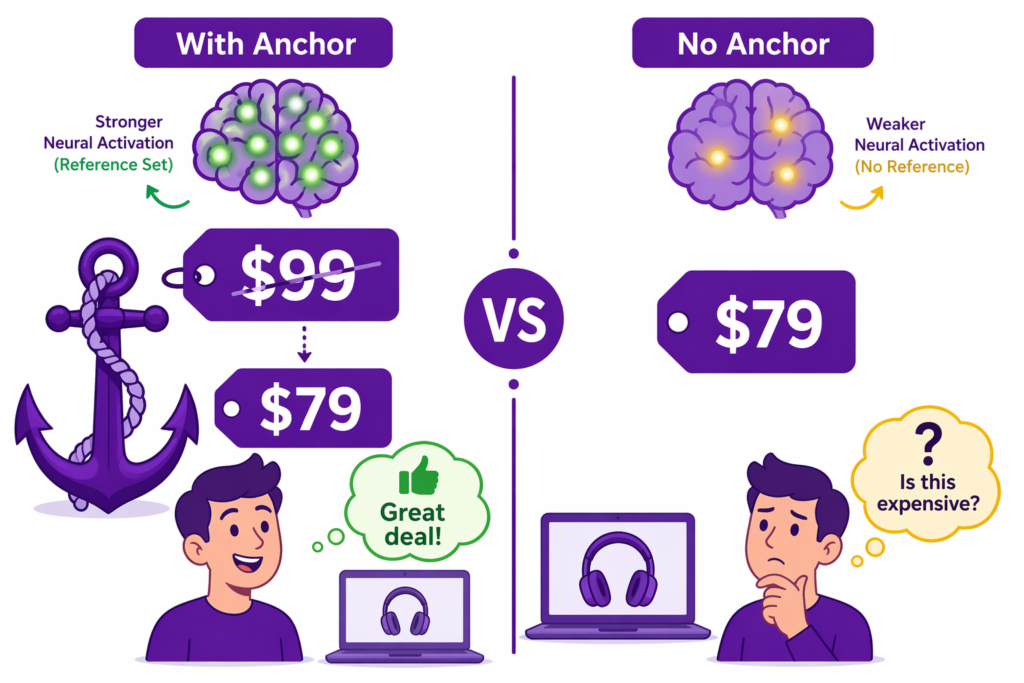
Research by Ariely shows that when subjects see a $100 price before evaluating whether a $60 price is “fair,” they think the $60 is a great deal. But when subjects see just the $60 price with no reference, they are ambivalent.
Same price. Different context. Different perception.
In ecommerce:
- “Was $99” anchors expectations
“Now $79” seems like a great deal relative to the anchor
Without the anchor, $79 feels ambiguous, leaving the shopper unsure whether it is expensive or cheap
This is why luxury brands protect their full price fiercely. If Rolex let everyone know their watches sell discounted at $4,000, the full price anchor of $10,000 weakens. The discount becomes expected, not special.
Conversely, this is why showing the original price alongside a discount is so powerful. You are establishing the anchor, then showing the deal relative to it. On Shopify, the cleanest way to set that anchor is with Was/Now pricing displayed across product pages and collections.
The “Zero” Effect: Why Free Is More Powerful Than Cheap
Shampanier’s research on the zero price effect shows that free triggers different psychological pathways than “cheap.”
A free item creates irrational enthusiasm. People will stand in line for free chocolates they would not buy for $0.50. But offer them $0.50 off a product, and they are less enthusiastic.
Why? Because “free” eliminates risk and deliberation. There is no decision cost to “free.” But $0.50 off still requires evaluation: “Is this worth my attention?”
This is why “free shipping,” “free gift,” and “free sample” are more powerful than equivalent dollar discounts in many contexts.
In Adsgun’s free gift with purchase promotion type, you are leveraging this zero effect. “Spend $100, get a free gift” activates this disproportionate enthusiasm. The free gift is the hook, even if its value is modest.
Time Pressure and FOMO: Scarcity Creates Urgency
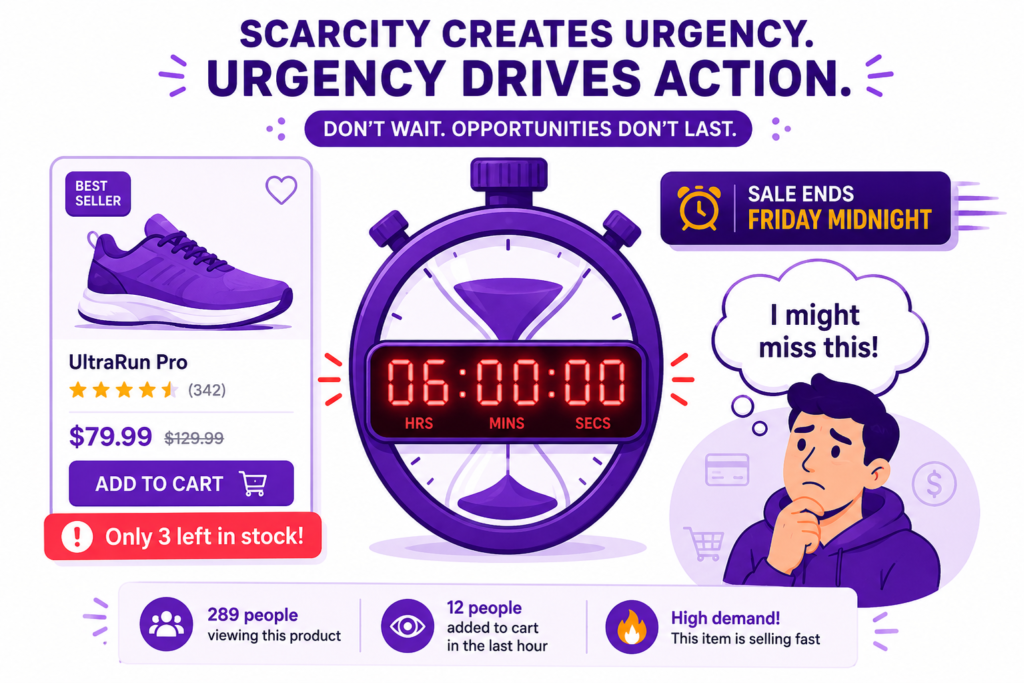
Scarcity creates urgency. When something is time-limited or limited in quantity, the perceived value increases disproportionately.
Countdown timers (“Sale ends in 6 hours”) activate this. So do limited-stock warnings (“Only 3 left”).
The psychology: in evolutionary terms, humans are wired to act on scarcity. In ancestral times, if a resource was scarce, you grabbed it. This wiring persists in modern brains.
A discount that feels nice becomes urgent when paired with “ending Friday.” The same discount without a deadline feels optional. That is the reason a properly built Shopify flash sale outperforms an open-ended promotion every single time.
This is why real deadlines work and fake ones backfire. A real “Black Friday sale ends Sunday at midnight” creates genuine urgency. A “Sale ends Friday” that magically resets every week trains customers to ignore it.
Social Proof Amplifies Discounts
“47 people bought this today at this price” combined with a visible discount creates compounding psychological activation.
Seeing that others are buying activates social proof (the consensus principle, where if others are doing it, it must be right) and scarcity (if many people are buying, supply is low, so I should buy before it is gone).
The combination is more powerful than either alone.
The Dark Side: Habitual Discounting and Brand Devaluation
Understanding discount psychology is powerful. Abused, it destroys brand value.
If you habitually and deeply discount everything, customers stop believing in full price. The “Was $99” anchor becomes fiction. Customers distrust the brand because they know the real price is lower.
Luxury brands protect against this by selective discounting. Not everyone gets the discount. Not always.
Similarly, if you run “limited time” sales that never actually end (or constantly repeat), customers learn to ignore the urgency signals. The deadline becomes noise.
Ethical discounting: use the psychology, but honestly. Real deadlines, real scarcity, real anchor prices. Do not abuse these principles.
Applying the Psychology of Discounts to Your Shopify Strategy
Here is how to use discount psychology ethically and effectively. Each tactic below maps onto one of the mechanics above, and they stack: the more of them you run together, the stronger the combined effect on conversions.
Establish real anchor prices
Price your products at what they are genuinely worth to customers. The “Was $99” needs to be real at some point, or represent genuine average value. If you are unsure how Shopify handles this internally, the Compare at Price guide walks through the mechanics.
Use visible discounts strategically
Show the original price and discount only for legitimate promotions, not as everyday pricing manipulated via compare at price. Visibility is what activates loss aversion. A discount the shopper never sees does no psychological work.
Create real scarcity
Limited-time promotions should have real end dates. Limited inventory should be real inventory. Fake urgency erodes trust faster than no urgency at all.
Use loss aversion language
“Save $20” frames more powerfully than “Pay $79 instead of $99.” The first activates loss aversion. The second is neutral.
Stack the psychology of discounts in ecommerce across the funnel
A time-limited discount, social proof (“200+ sold”), scarcity (“Limited inventory”), and visible savings on every page combine into compounding activation. This is the foundation of any strong Shopify Black Friday discount strategy, and it applies just as well to a quiet Tuesday flash sale.
Respect trust
If you abuse these principles, customers learn not to trust your anchors. Then no discount works.
FAQ: T he Psychology of Discounts in Ecommerce
Is using psychology manipulation?
No, not if it is honest. You are not creating false anchors or fake scarcity. You are presenting real information in ways that align with how human brains actually work.
Do discounts train customers to wait for sales?
Repeated, deep discounting does. Strategic, selective discounting does not. Customers who train themselves to wait do so because the brand discounts habitually and deeply.
Why do expensive discounts feel better than cheap discounts?
Anchoring. A $100 discount on a $2,000 product feels great (big number). A $5 discount on a $50 product feels modest. The same percentage off ($2,500 versus $250) feels different because anchoring works on absolute numbers, not percentages.
Does showing countdown timers actually drive conversions?
Yes, if they are real. Fake countdown timers that reset have zero effect after the first deployment.