Shopify Promotion Ideas: 15 Creative Campaigns for Any Store
A complete list of 15 creative Shopify promotion ideas with setup instructions, expected impact, and the right customer segment for each campaign.
Most stores run the same three promotions on repeat: welcome discount, holiday sale, free shipping threshold. The fastest way to break out of that pattern is to borrow Shopify promotion ideas that have already worked for other stores and adapt them to yours. This guide collects 15 creative campaigns ranked by use case, with setup steps, expected impact, and the right time to launch each one.
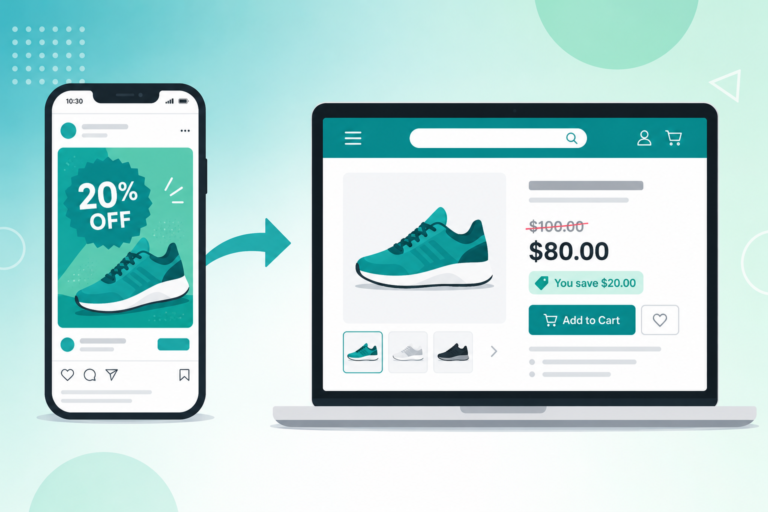
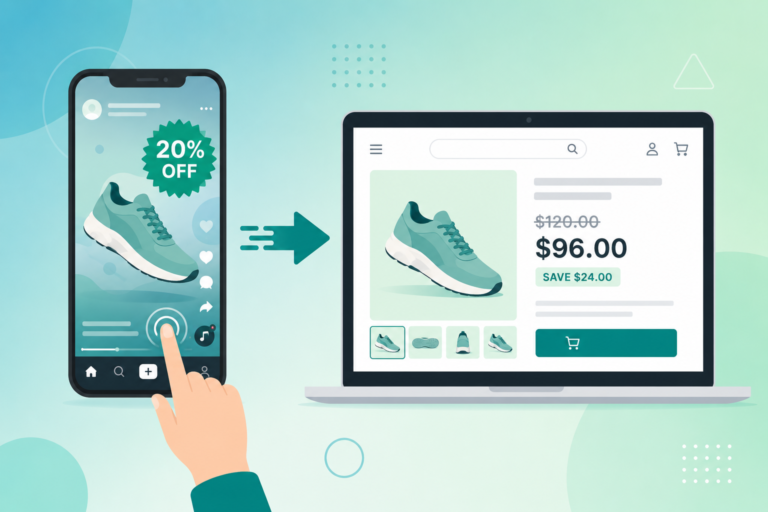
Promotions only work when customers actually see them. A discount code buried in a checkout box converts worse than visible strike-through pricing displayed everywhere from collections to cart. Keep that in mind as you read: every campaign below assumes the discount is visible at each step of the funnel, not hidden until the final payment screen.
What Makes a Shopify Promotion Idea Work in 2026
The Shopify promotion ideas that win in 2026 share three traits: visibility, urgency, and a clear reason to buy. Visibility means the discount shows on product pages, collection pages, cart, and checkout, not just in a code box. Urgency comes from a deadline, a limited quantity, or a deepening offer. The reason to buy is whatever story you wrap around the discount, whether it is a milestone, an honest mistake, a birthday, or a mystery reveal.
Each of the campaigns below builds on at least two of those traits. Pair the right idea with the right season and customer segment and you have a campaign that performs noticeably better than a generic 20 percent off.
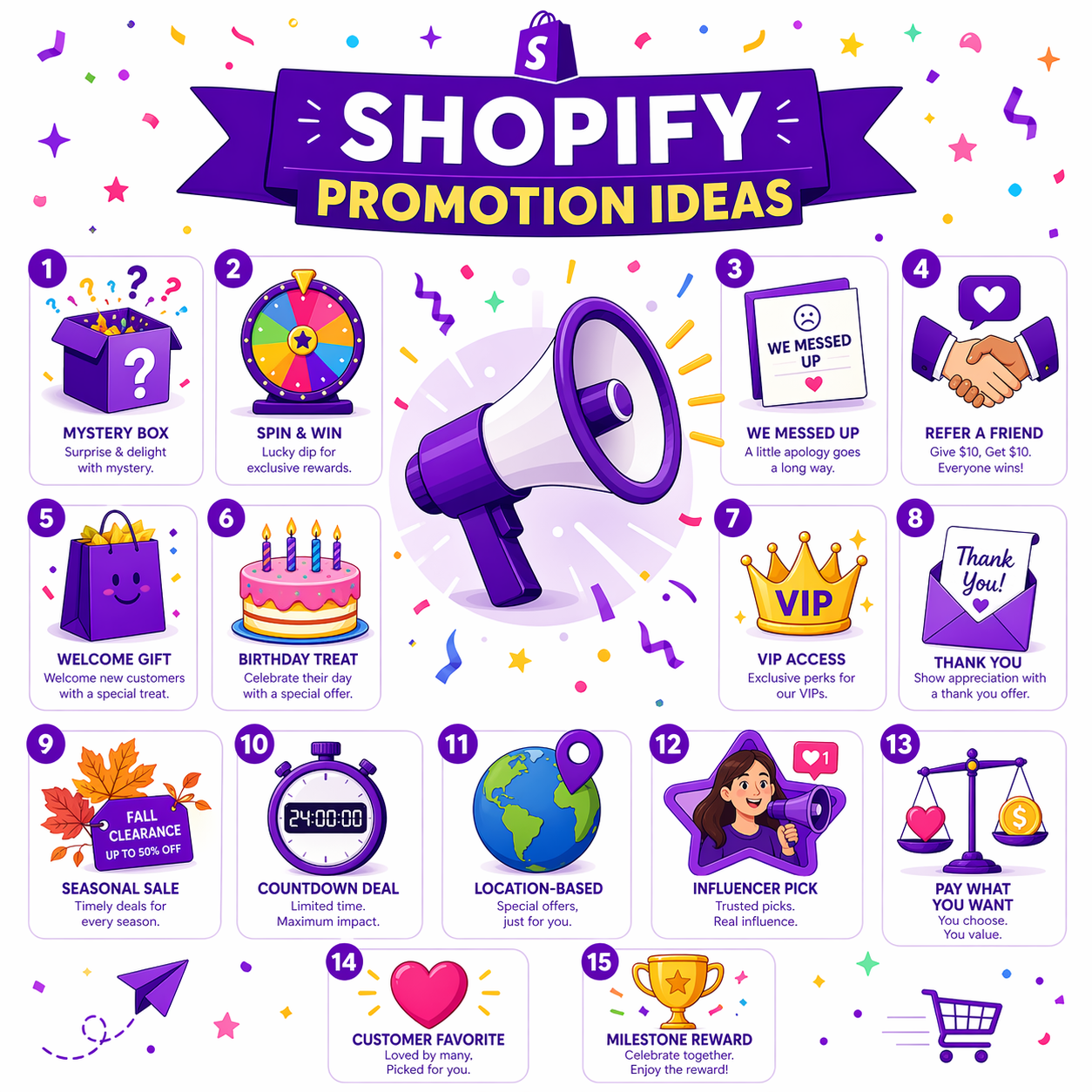
1. The Mystery Box Flash Sale
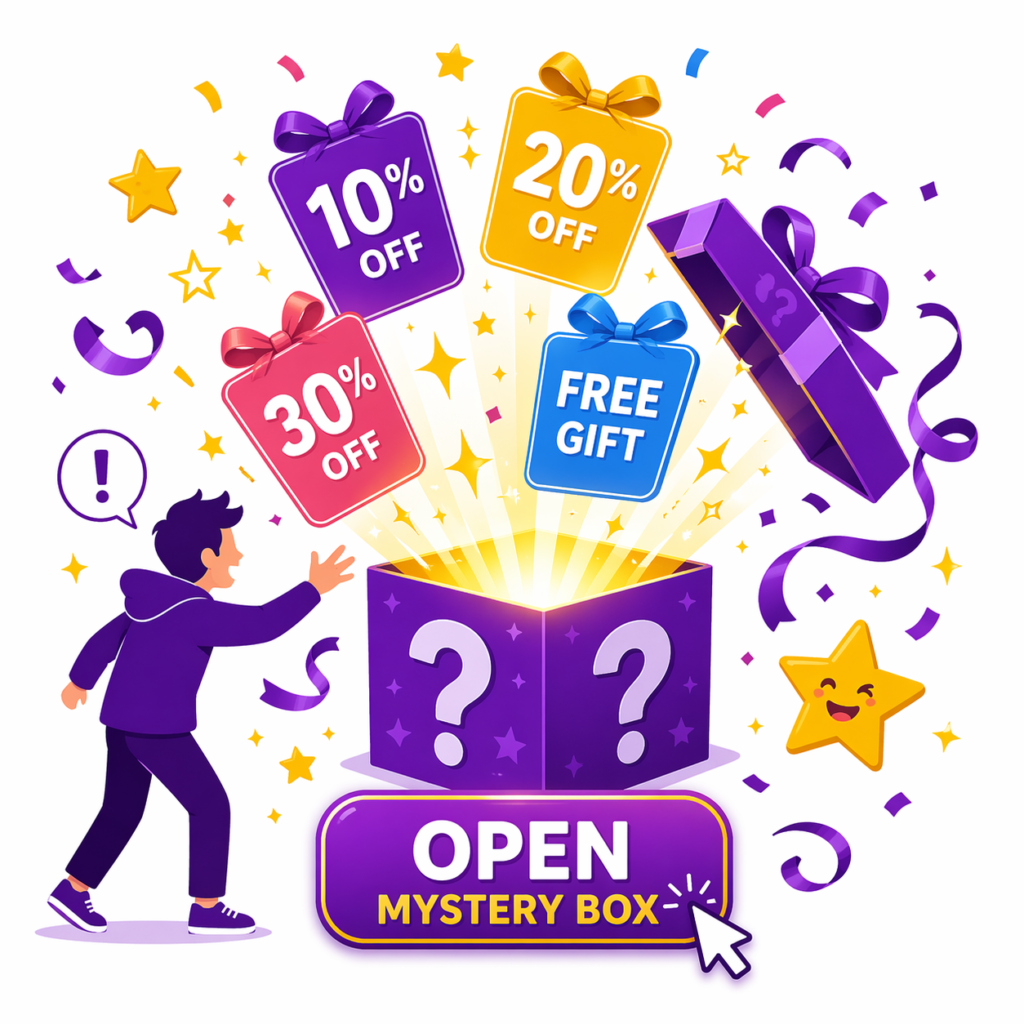
Concept: Customers click a link, open a mystery box, and get a randomly assigned discount from a range you set (10 to 30 percent off).
Why it works: Gamification. The uncertainty of “what discount will I get?” is exciting. Customers feel lucky if they get 30 percent and grateful if they get 15 percent.
Implementation:
- Create a custom discount code that applies random percentages, or set up 5 codes with different values.
- Use a landing page tool (Unbounce, Leadpages, or custom HTML) to show the mystery box UI.
- Customer clicks “Open Mystery Box” and gets assigned a code.
- They see their discount and land on a page with that specific discount already applied through a Shopify discount URL parameter.
Best for: New customers, email list growth, weekend promotions.
Expected impact: 25 to 40 percent of visitors will play, and 60 to 80 percent of players will make a purchase.
2. Lucky Dip Discount
Concept: Similar to mystery box but more transparent. “Click the lucky dip button and you might get 10 percent off, 20 percent off, or a free gift.” Display all possible outcomes upfront.
Why it works: Transparency plus excitement. Customers know the rules and cannot feel scammed.
Implementation:
- Generate multiple codes (LUCKY10, LUCKY20, LUCKY_FREE_GIFT) using bulk discount code generation so each customer gets a unique one.
- Use a spinner or button UI that lands on a random code.
- Customer sees their prize immediately and gets the code.
Best for: VIP customers, loyalty program, email campaigns.
3. “We Messed Up” Sale
Concept: Tell an authentic story about how your store made an error (produced too much inventory, bought the wrong size, ordered the wrong color) and need to clear it. Position the sale as honest, not manipulative.
Why it works: Authenticity. Customers respect brands that admit mistakes and reward them with purchases.
Implementation:
- Write a blog post or email explaining the honest situation.
- Create a promotion for the affected products only.
- Use language like “We ordered 500 units of the wrong color. Help us clear it with 30 percent off.”
Best for: Quarterly inventory clearance, building brand affinity.
4. Refer a Friend With Unique Codes
Concept: Customers who refer a friend get a reward (a 10 dollar credit, 15 percent off a future order). The referred friend gets a reward too (15 percent off the first order).
Why it works: Word of mouth is the most trusted form of marketing. According to Nielsen’s Global Trust in Advertising study, recommendations from people you know consistently rank as the most trusted channel worldwide. Both parties feel rewarded, and the referring customer becomes an ambassador.
Implementation:
- Install a referral app (Grocer, Omni, Bold).
- Generate a unique referral link for each customer.
- When they share with a friend and the friend buys, both parties get rewarded.
- Track referrals and reward your top referrers.
Best for: Building community, sustainable growth, high-LTV customers.
Expected impact: 15 to 25 percent of customers will share with at least one friend. If 10 percent of referrals convert, you are looking at 1 to 2 percent of revenue from referrals.
5. First Order Welcome Deal
Concept: Any new customer gets 15 percent off their first order. Automated, targeted, high converting.
Why it works: Removes first-purchase friction. New customers are price sensitive and a discount makes the risk feel lower.
Implementation:
- Create an automatic discount targeting new customers (by customer tag or account creation date).
- Limit to one use per customer.
- Display the offer prominently: “New here? Get 15 percent off your first order.”
- Include the code in your welcome email and auto-apply it through the cart link so customers never have to type anything.
Best for: Acquisition, baseline retention.
Expected impact: 15 to 25 percent conversion lift on first-time visitors who see the offer.
6. Birthday Month Discount for Loyalty Members
Concept: Customers who have shared their birthday in their account get a special discount during their birthday month. Twenty percent off, a free gift, or free shipping.
Why it works: Personalization. Customers feel special. Birthday discounts have strong emotional appeal.
Implementation:
- Collect birthdays in customer accounts (optional field).
- Tag customers with their birthday month.
- Create automatic discounts triggered by customer tags for that month.
- Send a birthday email: “Happy Birthday. Here is 20 percent off everything.”
Best for: Loyalty members, email subscribers, repeat customers.
Expected impact: Birthday month recipients have 2 to 3 times higher purchase likelihood that month.
7. Early Access VIP Weekend
Concept: VIP customers (high spenders, email subscribers, loyalty members) get 24 to 48 hours of advance access to a sale before it goes public. They see the discount first and buy while inventory is fresh.
Why it works: Exclusivity. VIPs feel valued. You move inventory faster to your best customers.
Implementation:
- Identify VIP customers (purchase history above 500 dollars, email subscriber, loyalty tier).
- Send them an exclusive Friday-night email with a private promotion link at 20 percent off, valid Friday to Sunday only.
- Launch the public version on Monday for everyone else at 15 percent off.
Best for: Rewarding loyal customers, moving inventory strategically.
Expected impact: VIPs purchase at 3 to 5 times higher rates and early access improves overall inventory turnover.
8. “Thank You” Post-Purchase Discount for the Next Order
Concept: After a customer completes their first purchase, send them a “Thank You” email with a 10 percent off code for their next order, valid for 30 days.
Why it works: Encourages repeat purchase. Customers already trust you because they bought once, so the friction is lower.
Implementation:
- Create a discount code for post-purchase use (THANKYOU_10).
- Limit to 1 use per customer, valid for 30 days.
- Email it within 24 hours of purchase as part of your Shopify email discount strategy with a message like “Thanks for your order. Here is 10 percent off your next one.”
Best for: Repeat purchase rate, LTV improvement.
Expected impact: 10 to 15 percent of recipients redeem the code and you see a 5 to 8 percent revenue lift on repeat purchase rate.
9. Seasonal Inventory Clear (Visible Deep Discount)
Concept: As seasons change (summer to fall, winter to spring), clear out seasonal inventory with a deep discount (40 to 60 percent off). Show the strike-through pricing prominently so the saving is impossible to miss.
Why it works: Inventory management. You move slow stock to make room for new inventory. The visible strike-through pricing activates urgency and drives volume.
Implementation:
- Identify items that need clearance.
- Create a discount code (CLEARANCE40) or an automatic discount for those items only.
- Display “Was 79 dollars, Now 47 dollars” prominently across product pages, collections, cart, and checkout.
- Send an email: “Summer clearance. 40 percent off summer dresses. Ends Friday.”
Best for: Seasonal brands, inventory management, clearing obsolete items. For a full seasonal playbook, see the Shopify Spring Sale strategy.
Expected impact: 60 to 80 percent of clearance inventory moves within 1 to 2 weeks.
10. The Countdown Stack (Deepening Discount Over Time)
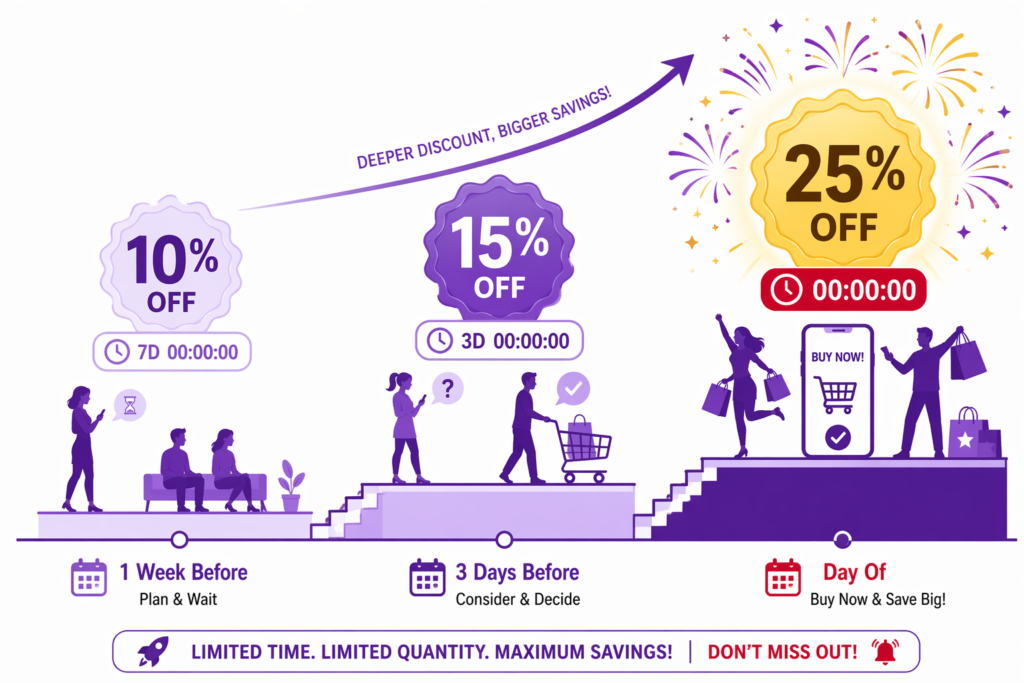
Concept: A promotion that deepens as an event approaches. One week before BFCM: 10 percent off. Three days before: 15 percent off. Day of: 25 percent off.
Why it works: Urgency escalation. Customers who see the 10 percent offer might wait. Customers who see the 25 percent offer buy now. The deepening discount captures procrastinators and serious buyers at different price points.
Implementation:
- Create multiple discount codes or automatic discounts with different values.
- Schedule them to activate at different times using a Shopify promotion scheduler.
- Update the savings messaging at each stage so customers feel the urgency climbing.
- Reflect the current discount level on your homepage and in active email campaigns.
Best for: Major sales (BFCM, seasonal), limited-time promotions.
Expected impact: 20 to 30 percent of customers wait for deeper discounts. The countdown stack captures them at the right price point instead of losing them entirely.
11. Location-Based Promotion (Shopify Markets)
Concept: Offer different discounts in different countries or regions. US customers get 10 percent off. UK customers get 15 percent off (accounting for VAT differences). Australia gets 20 percent off.
Why it works: Fair pricing across markets. You are not discriminating, you are accounting for tax, shipping, and cost differences.
Implementation:
- Use Adsgun’s multi-market promotions feature to set region-specific deals.
- Or use automatic discounts filtered by country.
- Customers in each market see their local pricing with the right discount already applied.
Best for: International stores, multi-market sellers.
Expected impact: Region-specific pricing improves conversion in each region by 5 to 10 percent.
12. Social Proof Bundle (Influencer Favorite Bundle)
Concept: Feature a bundle of products that an influencer, celebrity, or your founder recommends. “Influencer X’s Favorite 3-Item Kit: 89 dollars (Value 129 dollars).” This is social proof plus bundle plus discount combined.
Why it works: Trust transfer. Customers trust the influencer so they trust the bundle. The curated nature solves decision paralysis.
Implementation:
- Partner with an influencer or decide on a founder-curated bundle.
- Create the bundle in your product catalog or set up a free gift with purchase trigger.
- Price it 15 to 20 percent lower than the sum of the individual items.
- Market it prominently: “As recommended by [Influencer Name].”
Best for: Brand building, influencer partnerships, product discovery.
Expected impact: Bundles convert 2 to 3 times higher than individual items.
13. Pay What You Want (Limited Items)
Concept: For overstock items you really need to move, let customers pay what they think is fair. Set a minimum (around 20 percent of list price) but allow flexibility above that.
Why it works: Psychological empowerment. Customers feel like they got an incredible deal. This works for overstocked items you would otherwise write off.
Implementation:
- Pick a limited set of products you want to clear.
- Use a custom checkout or third-party app to enable “pay what you want” pricing.
- Set a minimum (for example, “We are overstocked. What would you pay? Minimum 10 dollars.”).
- Most customers will pay more than the minimum to feel like they got a fair deal.
Best for: Inventory management, building goodwill, one-time events.
Expected impact: Average payment is 50 to 60 percent of list price. You move inventory at cost or a slight loss but free up capital for next season’s products.
14. Employee or Founder Favorite (Personal Recommendation)
Concept: Feature a specific product as your founder’s or an employee’s favorite with a special discount. “Our founder’s favorite product: [Product]. 15 percent off when you buy it with [Complementary Item].”
Why it works: Personal endorsement. Customers connect with the human behind the brand.
Implementation:
- Ask employees or your founder for their honest favorite product.
- Create a landing page or email featuring it.
- Offer a modest discount (10 to 15 percent off).
- Include a personal story: “This product changed my morning routine. Here is why.”
Best for: Brand building, humanizing the company, customer connection.
Expected impact: Personal stories drive 2 to 3 times higher engagement than generic promotions.
15. Milestone Sale (Celebrate Your Growth)
Concept: “We hit 10,000 orders. Celebrate with us: 20 percent off everything, today only.”
Why it works: Shared celebration. Customers feel like part of your journey. It is genuine, not manipulative. According to the National Retail Federation, narrative-driven shopping events consistently outperform generic flash sales because they tie a transaction to a moment customers want to be part of.
Implementation:
- Track a milestone (orders, customers, years in business, social followers).
- When you hit it, announce it: “We just shipped our 10,000th order.”
- Run a flash sale in celebration and show the discount everywhere from your announcement bar to checkout.
- Open the promotion for 24 to 48 hours only to keep the urgency tight.
Best for: Building community, celebrating growth, generating buzz.
Expected impact: Milestone sales often generate 30 to 50 percent higher traffic due to excitement and earned media.
Choosing the Right Shopify Promotion Idea for Your Store
Each Shopify promotion idea works better for different stores, seasons, and customer segments. Use this matrix to pick the right starting point.
Matching Shopify Promotion Ideas to Your Goals
- New customers: #5 (welcome), #1 (mystery box)
- Loyalty: #6 (birthday), #8 (thank you), #7 (VIP early access)
- Inventory management: #9 (seasonal clear), #13 (pay what you want)
- AOV growth: #2 (lucky dip), #4 (referral), #12 (bundle)
- Excitement and buzz: #10 (countdown), #15 (milestone), #3 (we messed up)
Whichever campaign you pick first, the rule from the top of this guide still holds: the discount has to be visible, the deadline has to feel real, and there has to be a clear reason to buy. Stack two or three of these traits and the result is a campaign that performs better than a generic flat percentage. For more tactical building blocks, see the push sales tactics guide.
Run Your Next Shopify Promotion With Adsgun
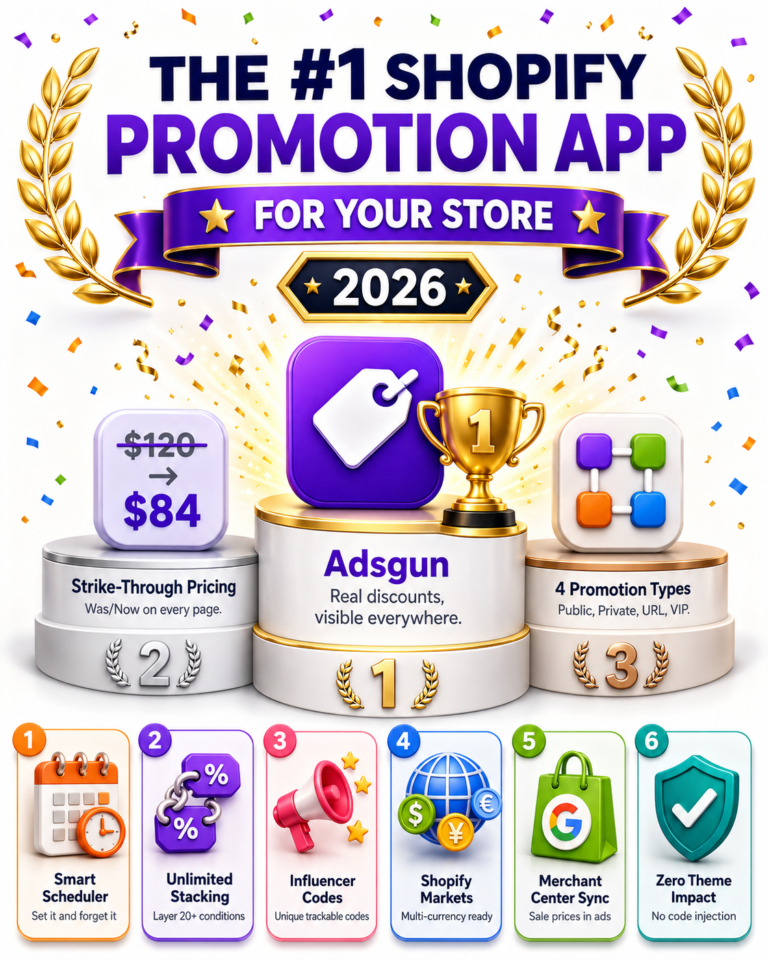
Pick one campaign from the list and make it impossible to miss. Adsgun displays strike-through pricing on product pages, collections, cart, and checkout automatically, schedules promotions to start and end on their own, and lets you run private promotions through unique links for VIPs and influencers.
Try Adsgun Free and launch your first creative Shopify promotion this week.